Nu departe de hotelul nostru si bazarele acoperite, se afla unul dintre cele mai vechi monumente ale Buharei, Moscheea Magoki Attori. Acesta este un monument pre-Islamic, construit pe locul unui templu pagan, inchinat lui Sin, zeul Lunii.

Moscheea Magoki Attori
Inainte insa, se afla aici o piata, unde se vindeau idoli si plante medicinale (attari).
“Magok” inseamna “intr-o groapa” si se refera la faptul ca moscheea se afla sub nivelul solului. Portalul, construit in 1549, care se afla pe o fatada asimetrica, reprezinta o capodopera a arhitecturii islamice timpurii din Buhara. In aceasta moscheea se desfasurau si serviciile religioase ale evreilor din oras. In prezent, aici se gaseste un Muzeu al covoarelor, deschis in 1991.

Moscheea Magoki Attori


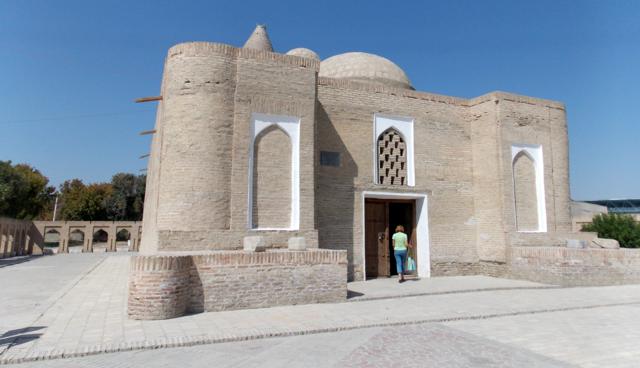
In apropierea Mausoleului lui Ismail Samani se afla Chasma Ayub, constructie legata de biblicul Iov (Ayub in araba), care a batut in pamant cu bastonul sau si a descoprit un izvor cu apa buna de baut. Ea a fost refacuta de mai multe ori, forma de astazi – caracterizata printr-un dom conic, neobisnuit pentru zona Buharei – datand din secolul al 16-lea. Izvorul de apa tamaduitoare, gasit de Iov, se afla si astazi in interiorul care gazduieste in prezent un Muzeu al Resurselor de Apa.
Chasma Ayub
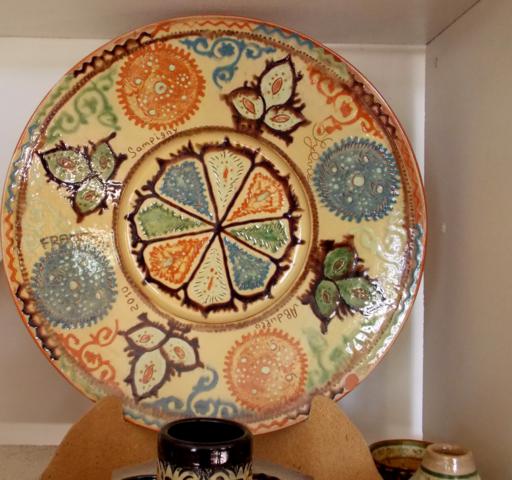
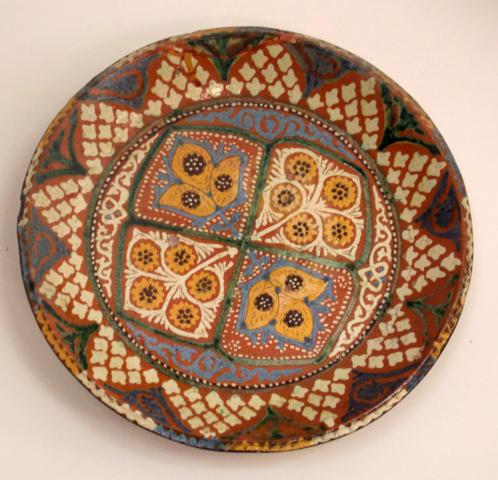
Unul dintre locurile interesante vizitate in oras a fost si un atelier de ceramica locala unde, pe langa prilejul de a-i vedea pe mesteri la munca, am putut vizita si un mic muzeu al acestei familii care, de sase generatii, prelucreaza lutul.

in atelier

cuptor pentru ars




On the Silk Road in Uzbekistan 22. Chasma Ayub and Magoki Attori Mosque
Near the Mausoleum of Ismail Samani, Chasma Ayub reminds us of the Job’s well from the Bible (Jobis Ayub in Arabic). This construction has been renewed more times, last time in the 16th century. The conic dome is unusual for Bukhara, and comes from the 12th century. There is a Museum of Water Supplies inside.
Not far from our hotel, the Magoki Attori Mosque is one of the oldest monument in Bukhara. It was constructed in the place of a pagan temple, dedicated to Siun, the god of the moon. This one stayed on the place were once a market for idols, medicines and herbs (“attori”means “herb”) was. It is believed that Jews worshiped together with Muslims in this mosque. The name of “magok” means “in the pit”, because the mosques is under the soil level. The portal is a masterpiece representative for the
Islamic architecture, and it was added in the 16th century. A Museum of the Carpet has been open inside, on 1991.
We also visited a local ceramic workshop, which runs in the family for six generations.
Categories:
VP
Some more beautiful pictures!
Joop Zand
As usual….. so nice photographed,
i like this very much my friend.
Greetings, Joop
ruma
Hello, Traveling Hawk.
Lovely and heartwarming your works..
Thank you for your visit.
I thank for your usual and hearty support.
The prayer for all peace.
Have a good weekend. From Japan, ruma❃
Traveling Hawk
Thanks, VP! Nice weekend to you!
Traveling Hawk
Thanks, Joop! Have the best Saturday!
Traveling Hawk
Thank you, ruma!
ANITA
Soo beautiful..god i want to travel like this!!Soo many good things you have seen..and soo many good things the earth has to show us..really really beautiful!!
Traveling Hawk
Thanks, Anita! May your wish come true!
Randy
The plates are marvelous!
Traveling Hawk
Yes, it’s a beautiful ceramics, Randy.
Helma
What have you seen the world yet many an Traveling Hawk and what you leave us there nice of them enjoy. My history and culture begins to rise quite so. Very informative and beautiful pictures of the buildings and ceramics.
Traveling Hawk
Thanks again, Helma!
Doug Hickok
Wow, the ceramics shop is stunning! Such beautiful designs and craftsmanship! Thank you for putting these images on display for all to see :^)
Traveling Hawk
It’s my pleasure, Doug:)