Today Kuthaya was firstly the Greek Kotyaion, then the Roman Cotyaeum, till 1080 when it was conquered by the Seljuk Turks. An interesting detail, which is both history and legend, is the fact that not far from Kuthaya is the place were Alexander the Great cut the famous “Gordian Knot”.
The interest of Turks in ceramics is old. They used to adorn their palaces and mosques with ceramic tiles. Iznik (former Nicea) was the most famous center. On 1514 Sultan Selim I brought to Kuthaya specialists in ceramics, to revitalize the industry. The peak in the development of this material was during the reign of Ottomans, the XVI-th century, when Evliya Celebi, a well known Turkish traveler and writer, born in Kuthaya, wrote that there were over 300 manufacturers here.
Drumul lung de la Marmaris la Istanbul nu poate fi facut fara mai multe pauze. Imi place sa cred ca locurile dedicate pentru asa ceva sunt si ele alese dupa anumite criterii, printre care imbogatirea turistului cu cunoastinte noi ar trebui sa primeze. Nu intotdeauna se intampla asa, din pacate sau nu toti turistii profita de ele. Asa s-a intamplat si la Kuthaya, unde cei din autocar s-au inghesuit la un restaurant cu autoservire.
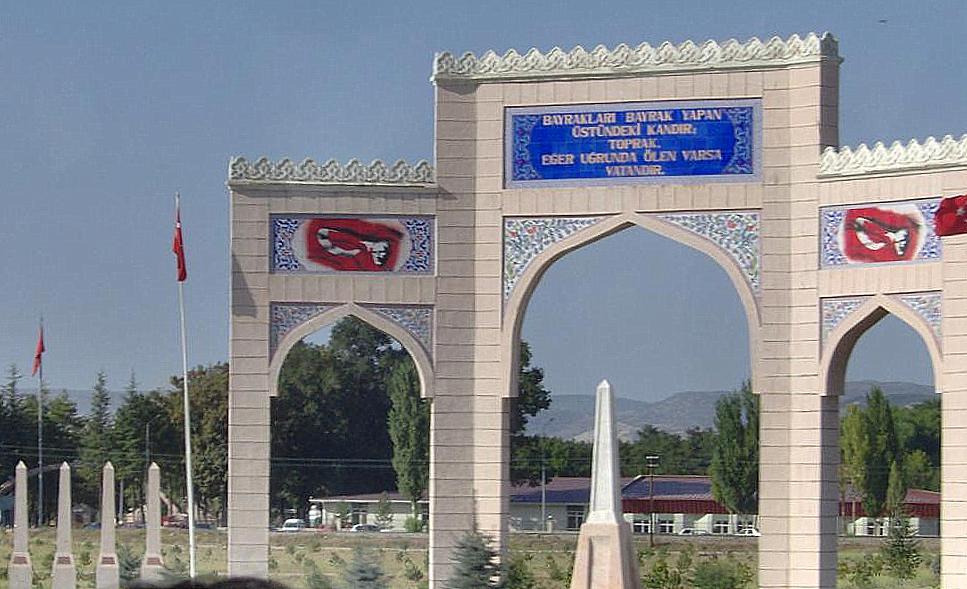

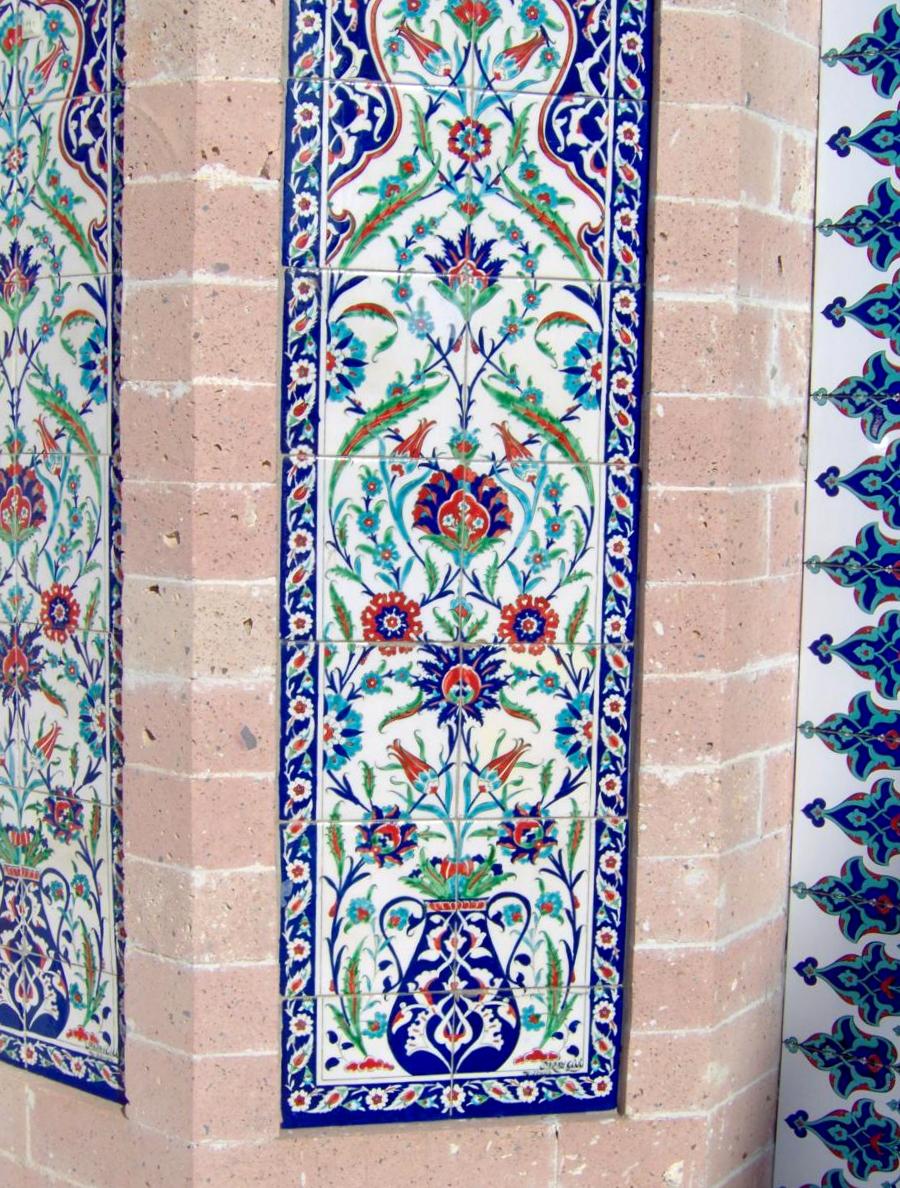
Interesul pentru ceramica, utilizata la decorarea palatelor si moscheilor, este vechi in Turcia. Alaturi de vestitul Iznik (fosta Nicea), ale carui placi de ceramica impodobesc Moscheea Albastra, Kuthaya este un mare centru al ceramicii turcesti.
Parte a Frigiei, localitatea a fost intai grecescul Kotyaion, apoi romanul Cotyaeum, pana in 1080 cand a fost cucerita de catre turcii selgiucizi. Ceramica devine importanta pentru oras in timpul Imperiului Otoman, ajungand la apogeul dezvoltarii in secolul al XVI-lea. Evliya Celebi, cunoscut calator si scriitor turc, care a calatorit si in tara noastra, fiu al orasului Kuthaya, aprecia ca in timpul vietii sale existau cca. 300 ateliere de ceramica. Marele avant a fost dat de catre sultanul Selim I, care a adus aici ceramisti din Iznik si alte parti, transformand Kuthaya intr-un furnizor de ceramica pentru palate si moschei. Alt “amanunt” interesant, ce tine de-o potriva de istorie si legenda, este acela ca aici, in apropiere de Kuthaya, Alexandru cel Mare a taiat celebrul “nod gordian”, in anul 333 i.e.n.
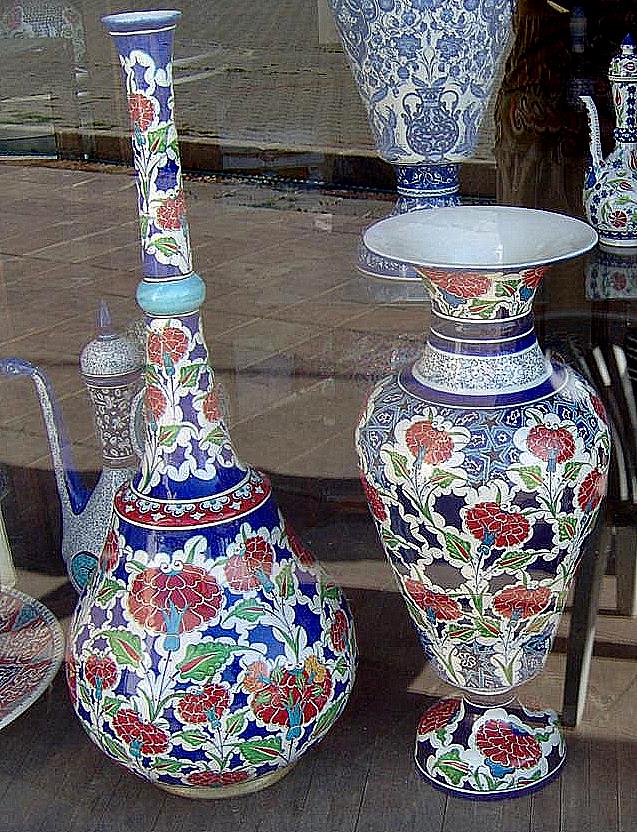
In apropiere, era un mic magazin care comercializa ceramica de Kuthaya si ne-am dus sa-l vedem.



Phivos Nicolaides
Interesting pieces of art! beautiful pictures!
Hanjié Wu
What a beautiful Turkish blue.
黄清华 Wong Ching Wah
Great Turkish art !
Joop Zand
Lovely colors has these pictures…… good serie from Turkey.
Greetings, Joop
Traveling Hawk
Thank you, Phivos!
Traveling Hawk
Hi, Hanjie! Glad you was her!
Traveling Hawk
Right, Wong! Thank you!
Traveling Hawk
Thank you, Joop!
Doug Hickok
I love the beautiful work of the china. I am glad you show us such wonderful scenes to begin the day TH :^)
Traveling Hawk
Thank you, Doug, you are welcome!
VP
I always like colorful images!
Traveling Hawk
Thanks for encouragements, VP!!
rama
Lovely, lovely collectables , Oh! they are all so pretty, did you buy some of it?
Helma
It is also possible to see that she ceramics very important, because it adorns many buildings and artefacts. Very nice and attractive photos.
Greetings, Helma
Kumiko
They are beautiful! These Arabesque designs are very exotic and unique,delicate.
The Turkish blue is so beautiful!
Traveling Hawk
Thanks, rama! Yes, I bought 3 small plates:)
Traveling Hawk
Thanks, Helma, for your appreciation!
Traveling Hawk
They have a lot of ceramics in their buildings too, Kumiko. When I’ll go again to Istanbul I would like tovisit the ceramics museum there.