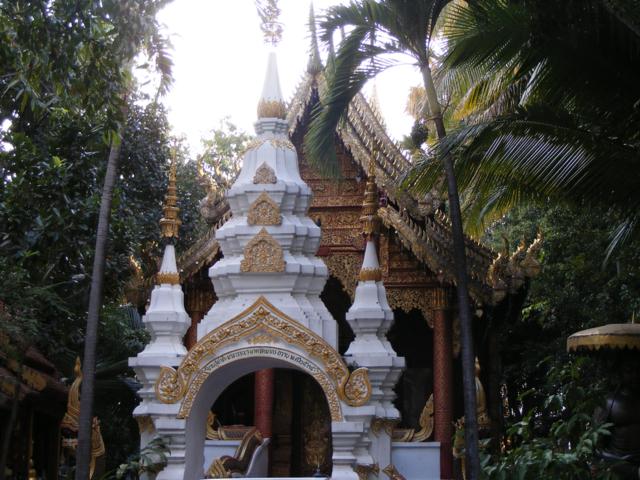
The founder of the temple or the real moment of its building are not known. There is only a legend, saying that it was built on 1613, by the first Burmese ruler of Chiang Mai (1579-1607), the King Bayinnaunng, who enshrined there the ashes of his son, Prince Saravadee.
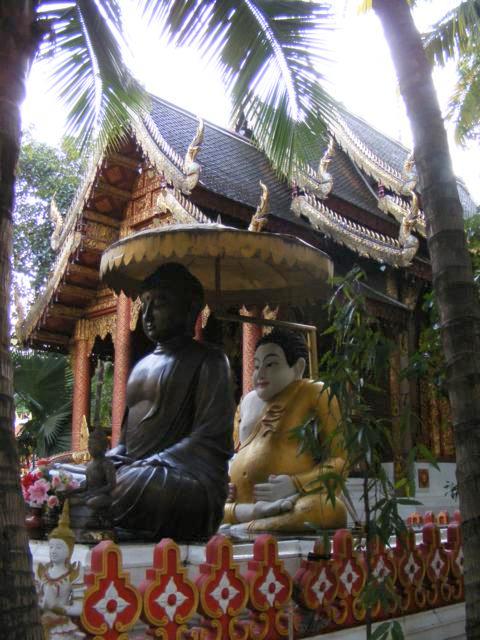
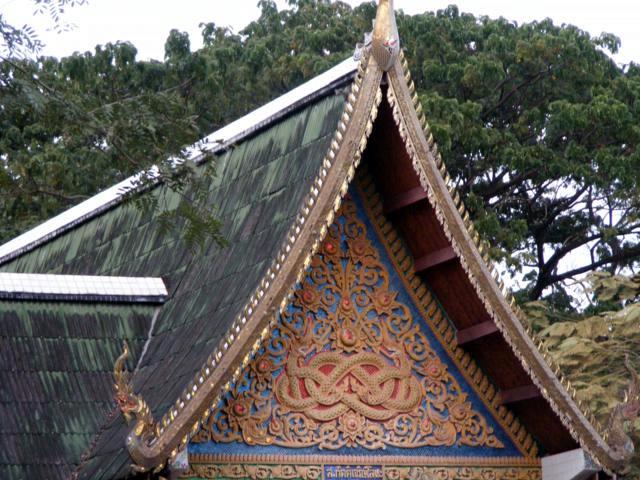
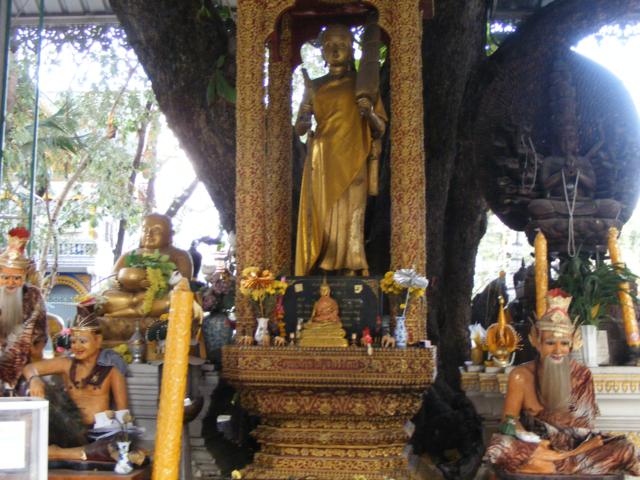
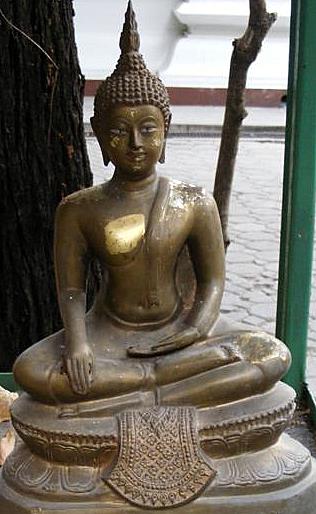
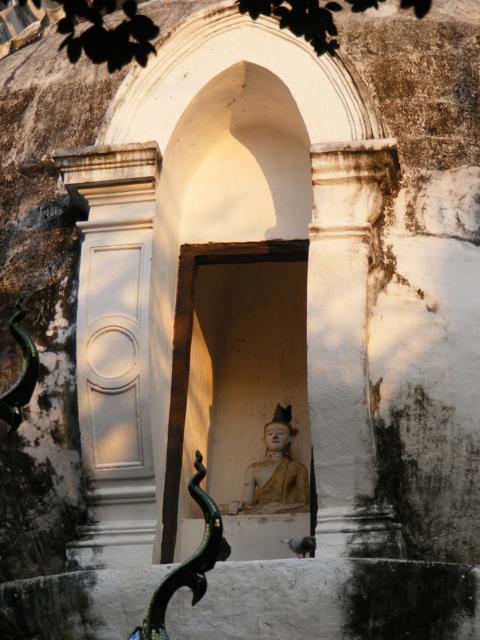
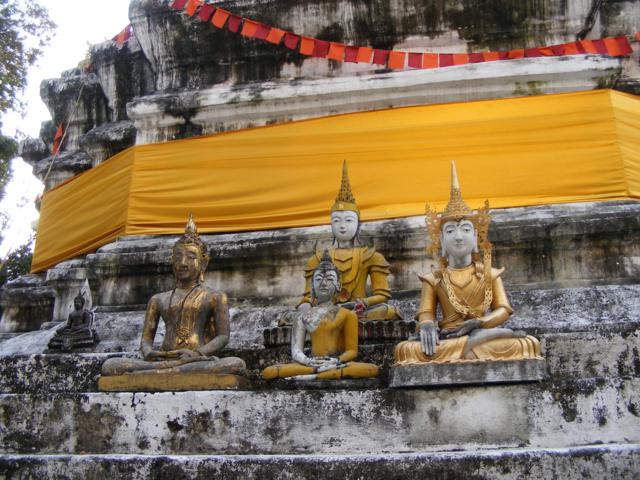
The temple grounds are full of trees, and among them you see the different structures of the temple. There are a lot of interesting Buddha’s images: meditating, sitting in “European style”, carrying the alms bowl, subduing Mara or meditating protected by Mucalinda, the King of Naga.
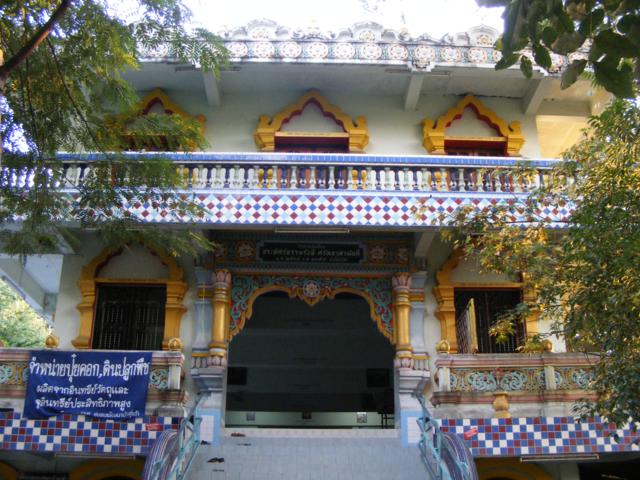
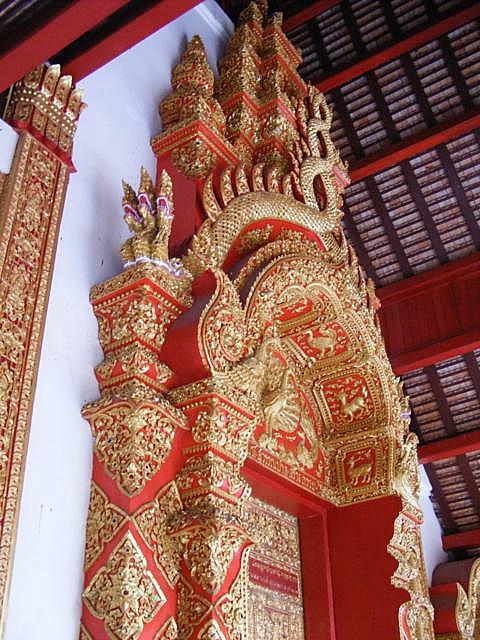
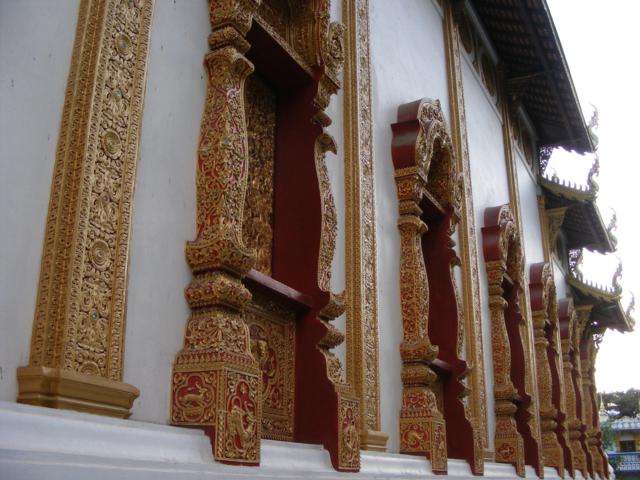
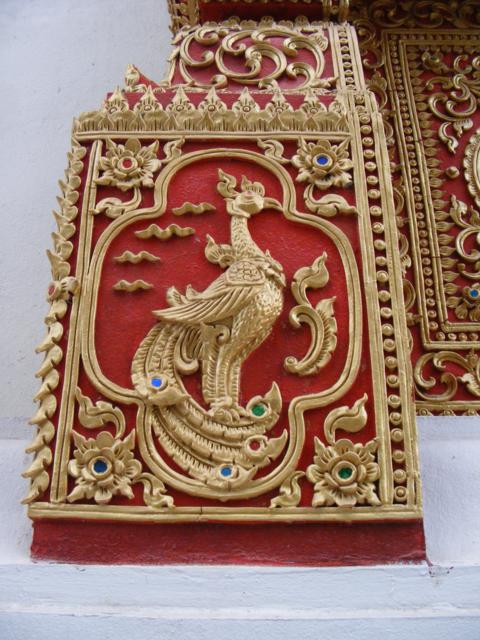
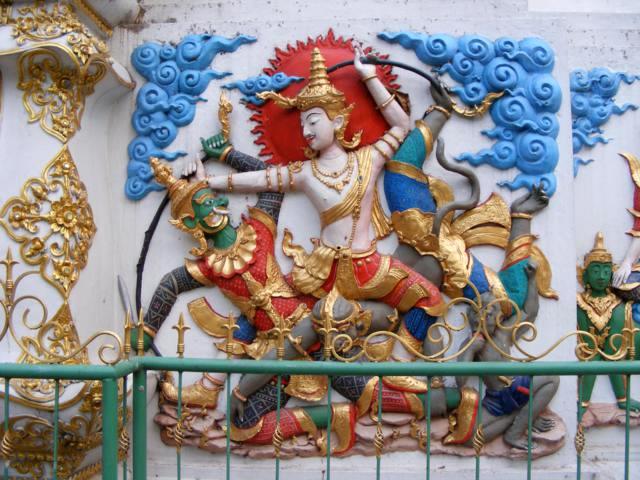
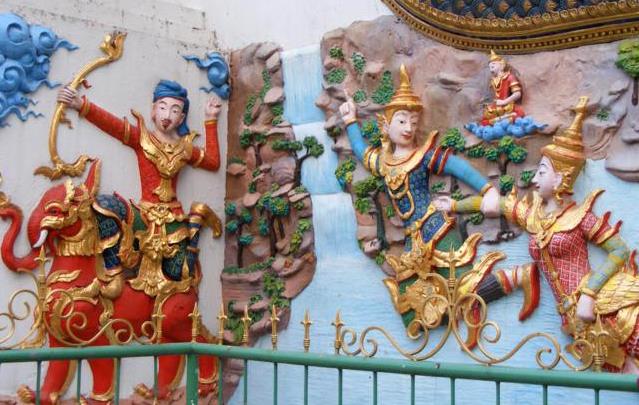
Even if the buildings were closed, we have been able to admire the wonderful adorned door and windows of the viharn, after we climbed a stair watched by Naga and Burmese style singhas. At the base of the building, right in front of it, vivid colored bass-relieves reminded us of India, by colors and style.
The famous chedi had as a model the pagodas from the Yunnan Province in China, brought to Thailand by the traders. The five forms of watermelon or alms bowls, representing the five Buddhas, have niches facing the cardinal directions, where Buddha’s images are housed. Colored porcelain flowers, in Chinese style, adorn the chedi.
Cand ai la dispozitie peste 300 de temple sa alegi, motivele pentru care vrei sa vezi unul anume sunt, e multe ori, arbitrare. Am vrut sa vad acest templu mai ales datorita numelui sau care m-a intrigat si a chedi-ului pentru care este faimos.
Nu se stie cine este fondatorul sau si nici data cand a fost construit. Exista doar o legenda, care il atribuie primului rege birmanez care a condus Chiang Mai intre 1579-1607, regele Bayinnaunng. Se spune ca el ar fi construit acest templu in 1613, pentru a pastra aici cenusa fiului sau, printul Saravadee.
Intrarea pe terenul templului este strajuita de perechea obisnuita de lei. Curtea este plina de arbori, dintre care “rasar” structurile care fac parte din templu.




Wat Ku Tao se afla in nordul orasului, mai departe de alte obiective. In plus, era un santier acolo si viharnul era inchis. Calugarii novici isi vedeau de treburi, umbland prin curte sau facand baie dupa un paravan, de unde se auzeau rasete si strigate. Cand ne-au vazut facand fotografii, ne-au strigat si ne-au facut semn sa-i pozam si pe ei.















rama
Beautiful!
VP
I appreciated the decoration in the latest post, but these are much better!
Liliana
Chiar frumoase fotografii. Ai idee ce simbolizeaza culoarea portocalie a calugarilor asiatici? Am vazut in mai multe fotografii.
Traveling Hawk
Yes, it was a beautiful temple, rama! Often, those which are not so well-known or advertised, are better!
Traveling Hawk
VP, thank you! It is an intended crescendo in quality 🙂
Traveling Hawk
Liliana, robele acelea sunt de culori diferite, in diverse tari. De exemplu, in Coreea de Sud sunt mai mult caramizii si bej-roscat, in Japonia sunt mai ales gri si negre. Se gasesc multe explicatii pe internet deoarece roba aceasta a evoluat si ea in timp. Explicaia data pentru simbolismul culorilor d epe steagul buddhist este aceea ca portocaliul reprezinta invataturile lui Buddha, intelepciunea si este o culoare sacra. In alta parte am citit ca aceste culori reprezinta si nivelul la care a ajuns calugarul respectiv. Daca as fi putu participa la o discutie cu calugarii, poate aflam mai multe.
joo
Absolutely stunning place! I would love to visit one day:)
Traveling Hawk
You should go to Thailand, Joo, if possible!
cartim
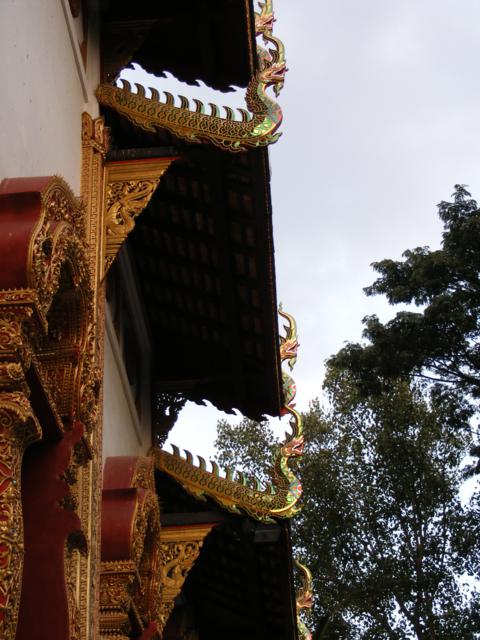
Ce frumos…imi plac dragonii (sper sa nimeresc) erau dragoni aceia, nu?
Superbe mi se par cuulorile, foarte vesele , nu sunt fan al acestui stil dar sunt foarte migalos executate.
Am vazut la Arashi un clip 😛 dar parca la tine este mai detailat..
Randy
I love the last shot best.
ruma
Hello, Traveling Hawk.
Spaces comfort.
Your work is embraced in your gentleness.
Thank you for the warmth of your heart.
The prayer for all peace.
Have a good weekend. From Japan ruma ❃
Traveling Hawk
Multumesc, cartim! In mitologia lor, aceia sunt naga, niste serpi uriasi si regele lor este Mucalinda. Balustradele de la scarile templelor au aceasta forma (am explicat intr-un post anterior, primul despre temlele din Thailanda). Cel rosu este singha, un leu, aici in stil birmanez. O pereche de singha pazeste mereu intrarea in templu.
Traveling Hawk
Thanks, Randy! Those Buddhas are at the base of the chedi.
Traveling Hawk
Thank you, ruma! You always have good words for me. A great weekend to you too!
Apollo
Foarte colorate templele thailandeze, si arhitectura este neobisnuita pentru ochii unui european.
Phivos Nicolaides
The place and the pictures are so beautiful!!
Traveling Hawk
Multumesc pentru vizita, Apollo! Sigur, este o arhitectura specifica, diferita de China, India sau Coreea. Sunt elemente comune, e adevarat dar fiecare are ceva numai al sau, care il face mai altfel, spre deosebire de tarile europene unde diferentele nu sunt atat de pregnante. Aceasta diversitate merita vazuta.
Traveling Hawk
Thank you, Phivos, for your appreciation!
Life Ramblings
such a gorgeous temple. beautiful deities and the carvings are exquisite.
Traveling Hawk
You are right, Life Ramblings!
Kumiko
Beautiful photos!
The colorings are vivid and exotic,
and every carvings are elaborately made.
They’re amazing!
Traveling Hawk
The temples in Thailand were beautiful, Kumiko!
黄清华 Wong Ching Wah
Beautiful Thai temple!
Arnaud
I once visited e red snail temple in China. Another unusual name. Interesting set of pictures anyway.
Traveling Hawk
Thank you, Wong!
Traveling Hawk
Welcome to my blog, Arnaud, and thank you for the comment.
magda
In this post, greatly admired the amazing details of their architecture!
Your pictures are great!
many greetings my dear friend!
Traveling Hawk
An interesting temple, indeed, magda! Thank you!
Helma
That’s a lot of pictures Traveling Hawk, and all equally colorful. You say there are 300 temples are there and then you go to visit some time.
Colorful details and especially the towers of the buildings I find very beautiful. This seemed to take one of your best travel.
Greetings, Helma
Traveling Hawk
You are right, Helma. Thank you!
Liliana
Nu puteai purta o discutie cu calugarii?
Portocaliul e o culoare frumoasa, puternica, o combinatie intre galben si rosu. Arata tonic-revigorant in comparatie cu sinistrul negru de la noi.
Traveling Hawk
Nu, Liliana, findca cei din curte munceau si nu m-am gandit la asta, iar cei de la balcon nu dadeau semne ca ar stii engleza. Probabil ca la templele unde sunt anuntate aceste discutii exista calugari vorbitori de engleza. De altfel la Wat Chedi Luang era si o scoala de calugari, ceea ce poate explica prezenta programului de “chat”.